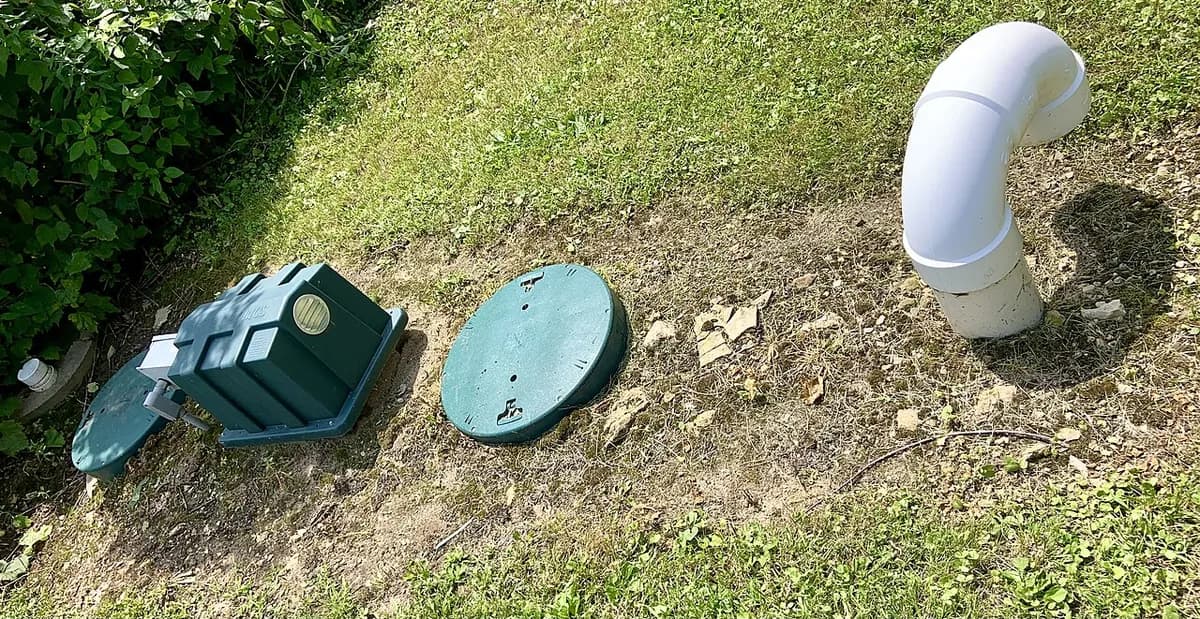
Homeowners searching for septic failure signs in San Luis Obispo County often mix two different problems: a tank that is due for pumping and a system that can no longer treat or dispose of wastewater. The first is maintenance. The second can mean drain-field stress, damaged components, or a path toward repair permits. SLO County Septic focuses on pump-outs and inspection quotes — this guide helps you triage what you are seeing from the Nine Sisters foothills and North County ranch country to South County and the coastal fringe.
For everyday “time to pump” cues (slow drains without sewage surfacing, a forgotten pump date), start with our Central Coast pumping warning signs guide. The sections below focus on failure-leaning and emergency patterns.
Full tank vs system failure
A full tank fills with solids and scum until liquid capacity shrinks. Pumping restores working volume. Failure usually shows up when wastewater cannot move through the drain field or distribution system — even after a recent pump-out — or when components are cracked, collapsed, or saturated beyond recovery. Clues that lean toward failure rather than “just pump it”:
- Symptoms return within days or weeks of a thorough pump-out
- Persistent soggy or sewage-smelling ground over the leach field in dry weather, not only after a storm
- Sewage surfacing at the field, distribution area, or downhill from the tank
- Multiple fixtures backing up with evidence of wastewater outdoors, not a single clogged toilet
- An inspection report that documents structural defects, root intrusion into critical lines, or a non-functional field
This page is educational triage guidance — not a diagnosis, engineer’s report, or County permit decision. Active sewage in the home or a public health concern also warrants contacting appropriate local authorities while you arrange professional service.
Indoor emergency cues
- Wastewater or sewage backing into tubs, showers, or floor drains when toilets flush or laundry runs
- Strong sewage odors inside that do not clear with ventilation — especially near lower-level fixtures
- Gurgling across multiple bathrooms paired with outdoor wet spots or odors at lids
- Sudden total loss of drainage in a septic-served home (rule out a simple house-side clog, but do not keep flooding the system)
Minimize plumbing use until help arrives. For active backups, call (805) 323-3158 and see emergency / same-week pumping.
Outdoor and drain-field failure patterns
- Standing sewage or gray water over the drain field that does not dry between irrigation or rain events
- Black, anaerobic-looking soil or constant odor at the field even when the house is quiet
- Wastewater breakout along slopes, ditches, or property edges downhill from the system
- Lush, spongy strips that stay green in summer drought while the rest of the yard browns — especially with odor
- Tank lids or cleanouts that weep or overflow under normal household use
After wet Central Coast winters, saturated soils can unmask a weak field sooner. That does not always mean permanent failure — but soggy ground plus indoor backups is not a “wait until spring” experiment.
Local framing: North County, foothills, South County, coast
- North County (Paso Robles, Templeton, Atascadero) — guest-heavy harvest weekends and larger ranch parcels can overload a tank that was already due. Long driveways and locked gates delay emergency access; share codes and lid notes when you call.
- Nine Sisters / SLO foothills — hillside and canyon-edge lots near San Luis Obispo can show breakout on slopes; steep grades also affect hose length and staging for urgent pump-outs.
- South County (Nipomo, Arroyo Grande fringe) — year-round occupancy means skipped pump cycles add up. Persistent wet spots in dry months deserve a closer look, not another season of “it seems fine.”
- Coastal fringe (Los Osos, Morro Bay outskirts, Cambria, Pismo Beach fringe) — confirm sewer vs septic first. Fog and storms do not replace pumping, but saturated soils leave less margin when a field is stressed. Vacation-rental turnover can accelerate sludge buildup between calendar reminders.
What to do next (practical sequence)
- Stop non-essential water use. Do not keep running laundry or long showers into a backing-up system.
- If sewage is indoors or there is a public health concern, contact appropriate local authorities in addition to arranging pumping.
- Call (805) 323-3158 for emergency / same-week pumping when capacity allows — or use the quote form marked Emergency.
- After the urgent pump-out, ask whether symptoms looked like a full tank only or suggested field/distribution issues. Keep the invoice for your records.
- If you are buying or selling, schedule a real estate septic inspection that matches contingency dates. Major repairs or replacement may need County Environmental Health review — see our septic permits guide.
How we help (and what we do not claim)
SLO County Septic provides residential pump-outs and transaction-oriented inspection requests across San Luis Obispo County. We do not diagnose engineered failure, dig drain fields, issue County permits, or publish fabricated star ratings. Share your city or ZIP, access notes, and whether you need pumping, inspection, or both — we confirm within one business day when capacity allows.