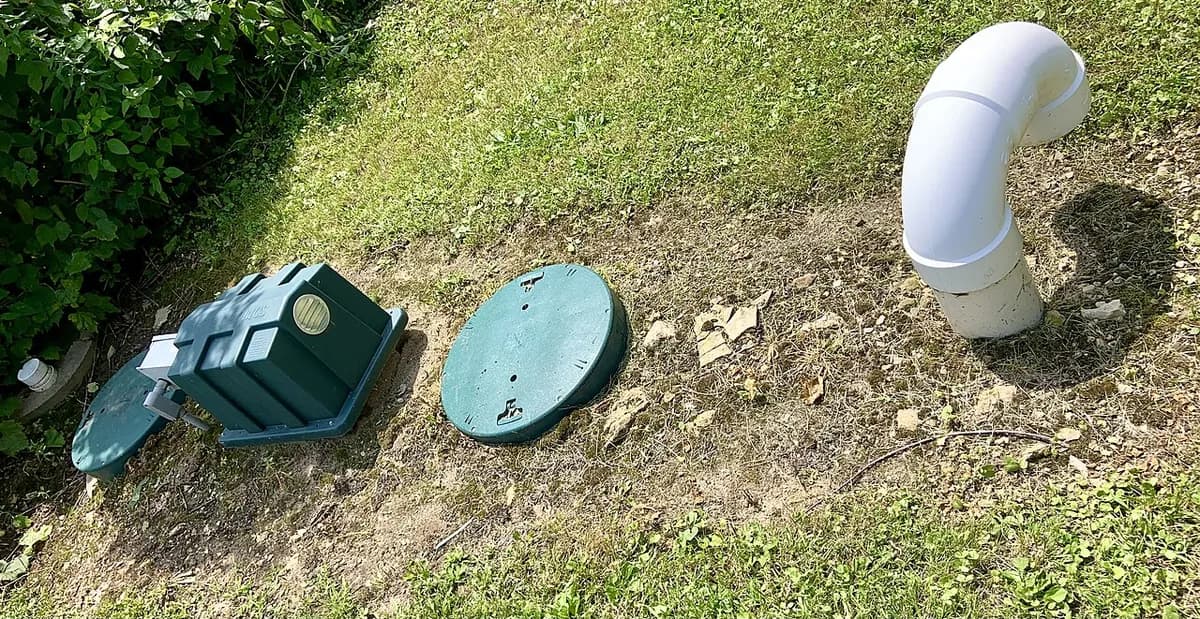
One of the most common questions before a septic pump-out in San Luis Obispo County is simple: where is the lid? Many homes from the Nine Sisters foothills to North County ranch land, South County farm fringe, and the coastal edge were built decades ago, and the tank access has since disappeared under lawn, gravel, decking, or drought landscaping. Finding it ahead of time can shorten the visit, reduce digging, and help SLO County Septic give a more accurate quote.
This guide covers safe, low-effort ways to narrow down the location. If you already know where your lids are, skip ahead to what happens during a septic pumping visit.
Safety first
- Never climb into, lean into, or put your head inside an open septic tank. Tank gases can be dangerous, and old lids can be weak.
- Keep children and pets away from any opened or cracked lid, and do not leave a lid off unattended.
- Call 811 before digging deeper than light hand probing, especially near irrigation lines, gas, or electrical runs to outbuildings and wells.
- If a lid looks cracked, sunken, or soft, stop and mention it when you book — do not stand on it.
Start with paperwork you may already have
- Old pump-out invoices — many crews sketch or note lid location, tank size, and depth.
- Purchase or escrow documents — a prior real estate septic inspection report often includes a site sketch or photos.
- Permit records — the County may have records for the original system or later repairs that include a site plan. Availability varies by property age; see our SLO County septic permits guide for how pumping, inspections, and permitted work differ.
- Neighbors and prior owners — on older North County and Templeton-area parcels, the folks next door often have a similar layout and a good memory of where trucks parked.
Clues to look for on the ground
- Find where the main sewer line leaves the house. Look in a crawlspace, basement wall, or at a plumbing cleanout near the foundation. The tank is usually in line with that pipe, commonly within a short distance of the house.
- Think downhill. On foothill lots around San Luis Obispo and Atascadero, gravity systems generally put the tank lower than the house drains.
- Watch the grass and soil. In dry Central Coast summers, a rectangle that browns faster (thin soil over concrete) or stays slightly greener can hint at the tank outline. Persistent soggy or odorous spots are a different story — see septic failure warning signs.
- Look for odd features. A lone paver, a decorative rock, a birdbath, a small square of gravel, or a short capped pipe sticking up in the yard can mark access points or inspection ports.
- Probe gently. A thin metal rod or soil probe pushed into soft ground every foot or so along the sewer line path can strike a flat concrete lid. Stop if you hit anything that feels like pipe.

Local patterns across SLO County
- North County (Paso Robles, Templeton, Atascadero) — larger ranch and vineyard parcels may have tanks farther from the house, guest units with separate systems, and long driveways. Note truck access, gates, and any second structure that drains somewhere different.
- Nine Sisters and SLO foothills (San Luis Obispo) — hillside lots often have retaining walls, terraces, or decks built after the system went in. Lids can end up under steps or patios, so photos of the downhill side of the house help.
- South County (Nipomo, Arroyo Grande fringe) — sandy soils and mature landscaping are common. Drip lines and irrigation valves near the tank area are worth flagging before anyone probes or digs.
- Coastal fringe (Los Osos, Morro Bay outskirts, Cambria) — first confirm the home is still on septic. Some coastal properties have conversion history, and an abandoned tank is not the same as an active one. Vacation rentals benefit from a lid map left for owners and property managers.
When a riser makes sense
A septic riser is a short shaft that extends the tank access up to ground level with a secure lid. Once installed, future pump-outs and real estate inspections usually skip the digging step. Risers are worth considering when:
- Your lid is deep or under hardscape you do not want to keep disturbing
- You run a short-term rental or guest-heavy property that needs more frequent service
- You plan to sell and want inspections to move quickly during contingency
- You have had to pay for locating or digging more than once
Ask during your visit whether a riser is a good fit for your tank, and confirm whether any related work needs County review before it is done. Riser lids should be secure and child-resistant.
What to tell us when you request service
- City or ZIP and whether the home is full-time, part-time, or a rental
- Whether you know the lid location, think you know, or have no idea
- Any photos or sketches from invoices or inspection reports
- Gate codes, driveway notes, and where a truck can safely park
- Whether you need routine septic pumping, an escrow inspection, or both
Call (805) 323-3158 or email brycemooreslo@gmail.com. If drains are backing up right now, skip the yard search and go straight to emergency / same-week pumping.